

Mercury Marine - NVH Technical Center
| Client | Mercury Marine |
| Location | Fond Du Lac, Wisconsin |
| Size | 19,800 sf |
| Sector | Industrial |
| Services | Architecture, Engineering, Planning |
| Completion | 2018 |
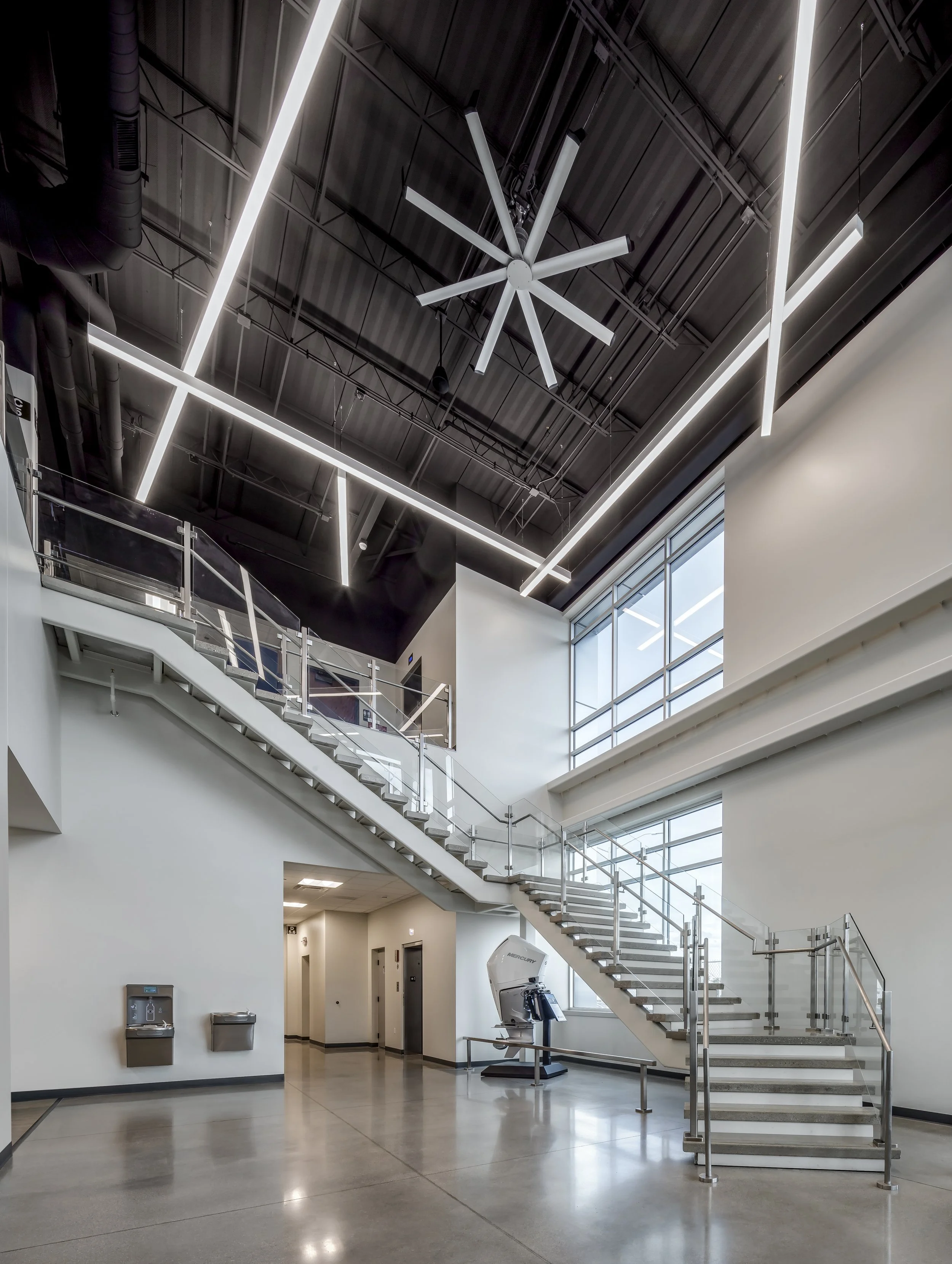
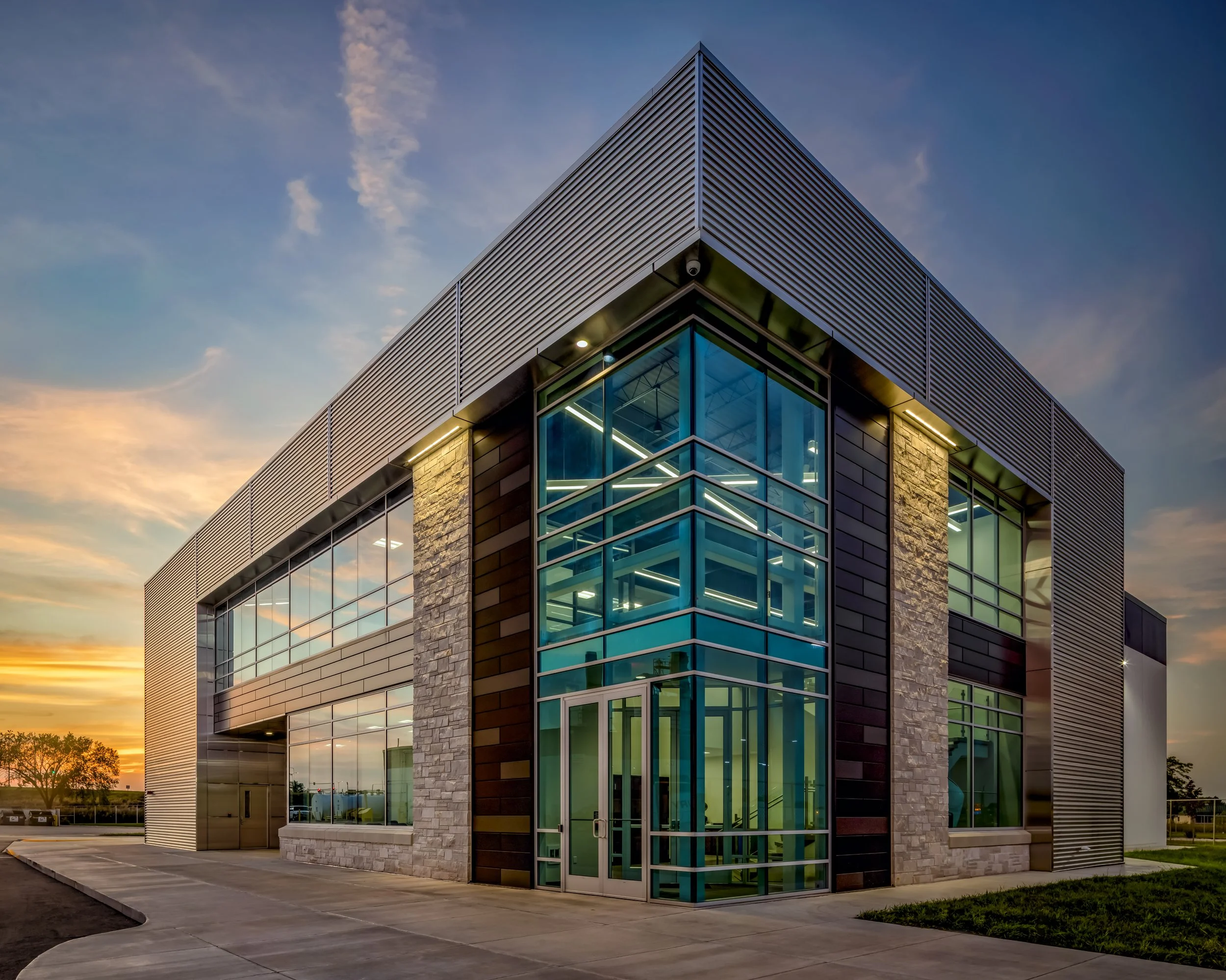
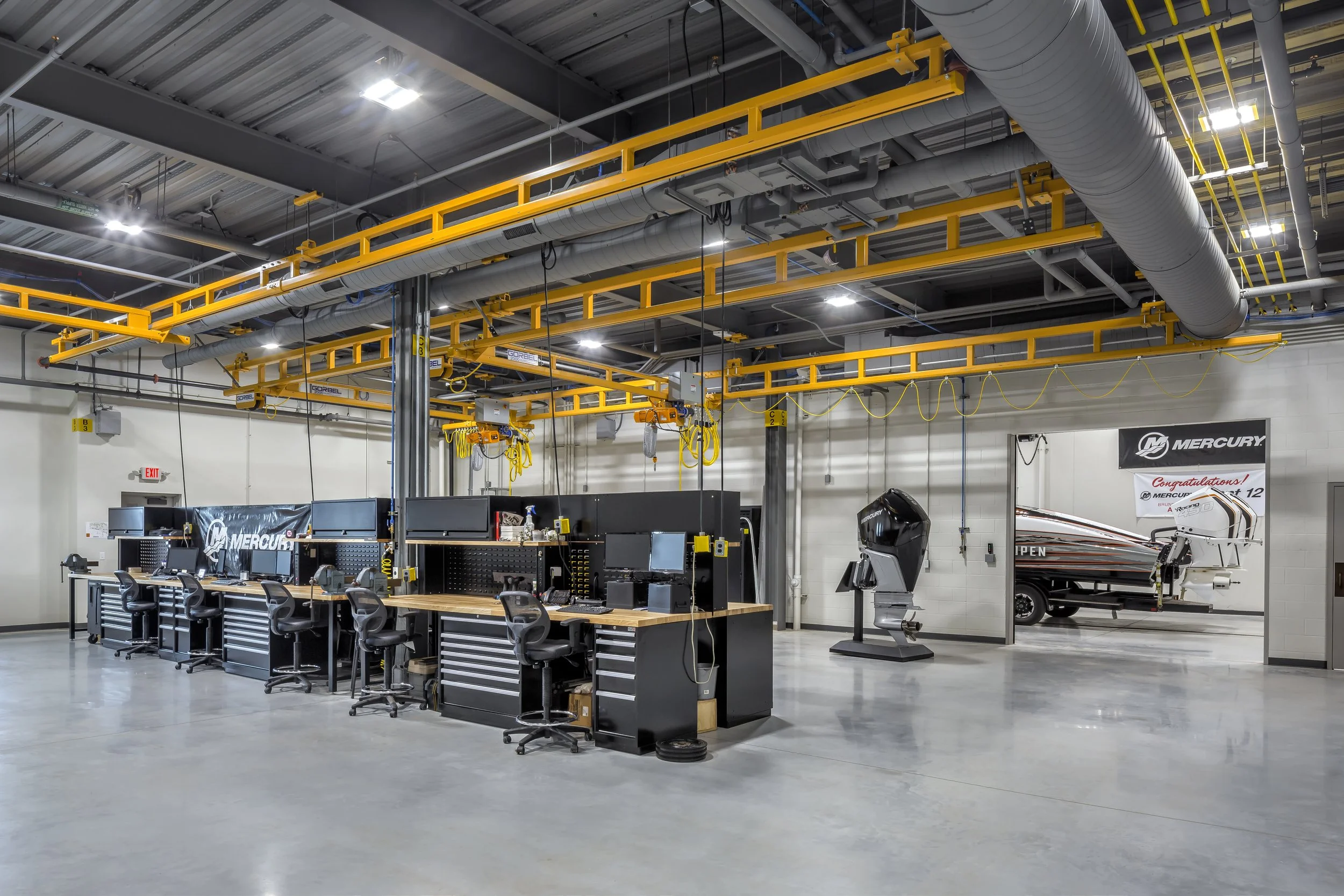
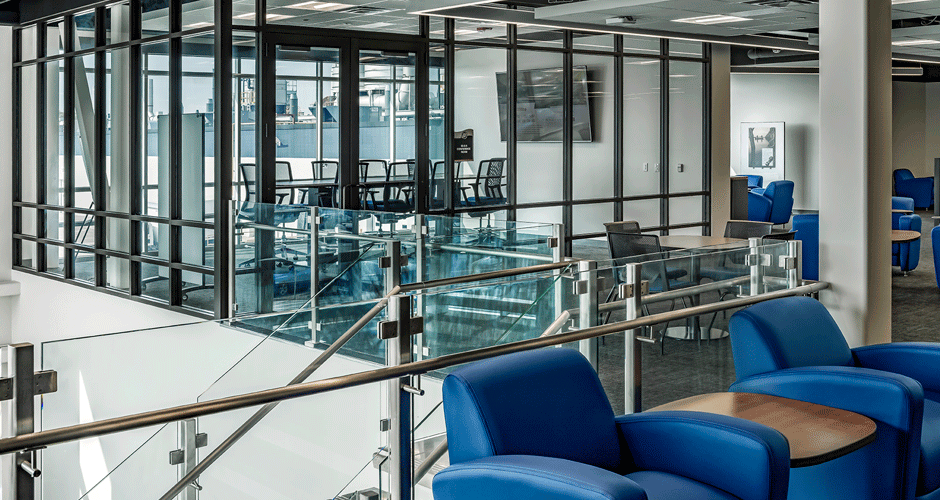
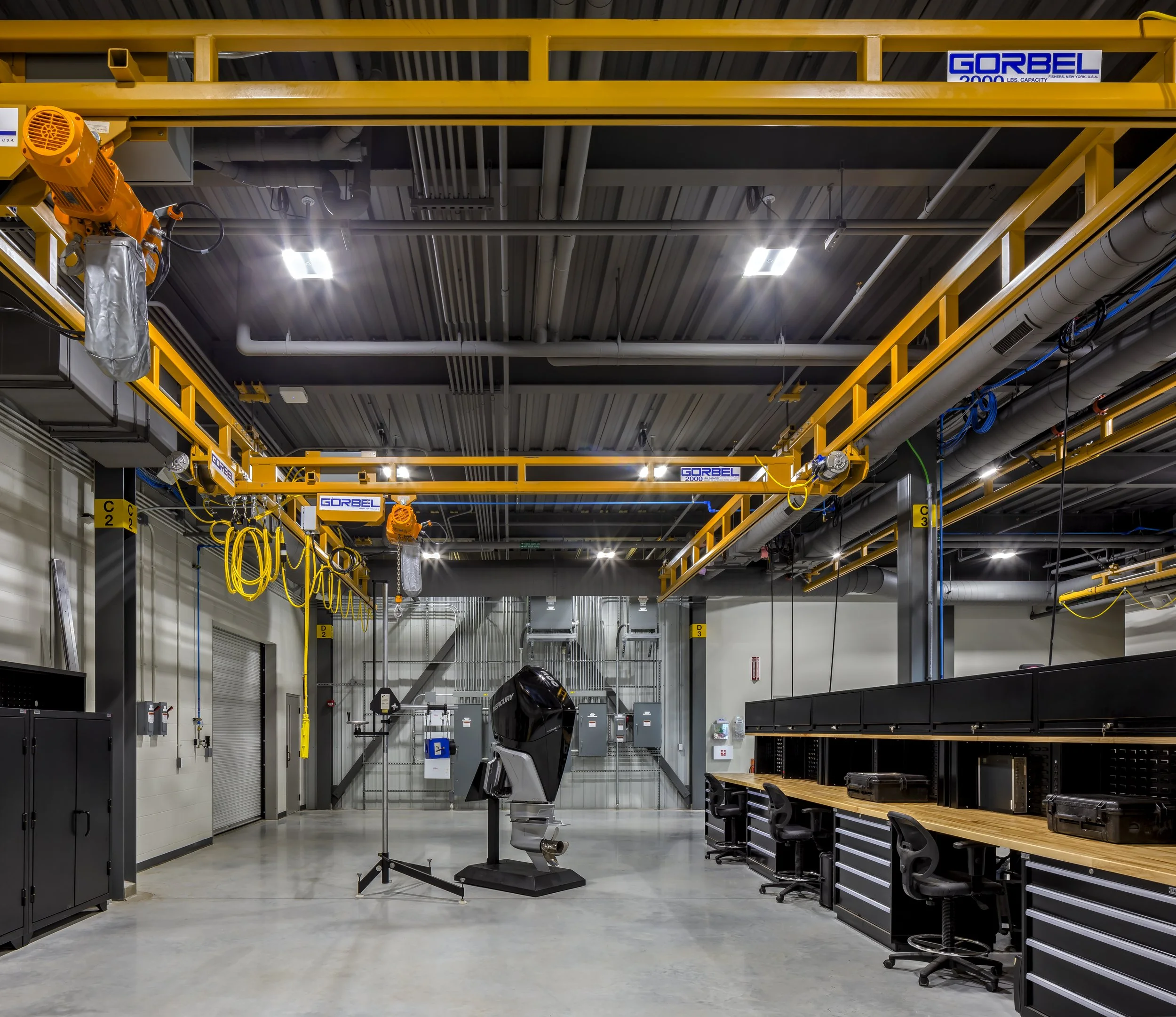
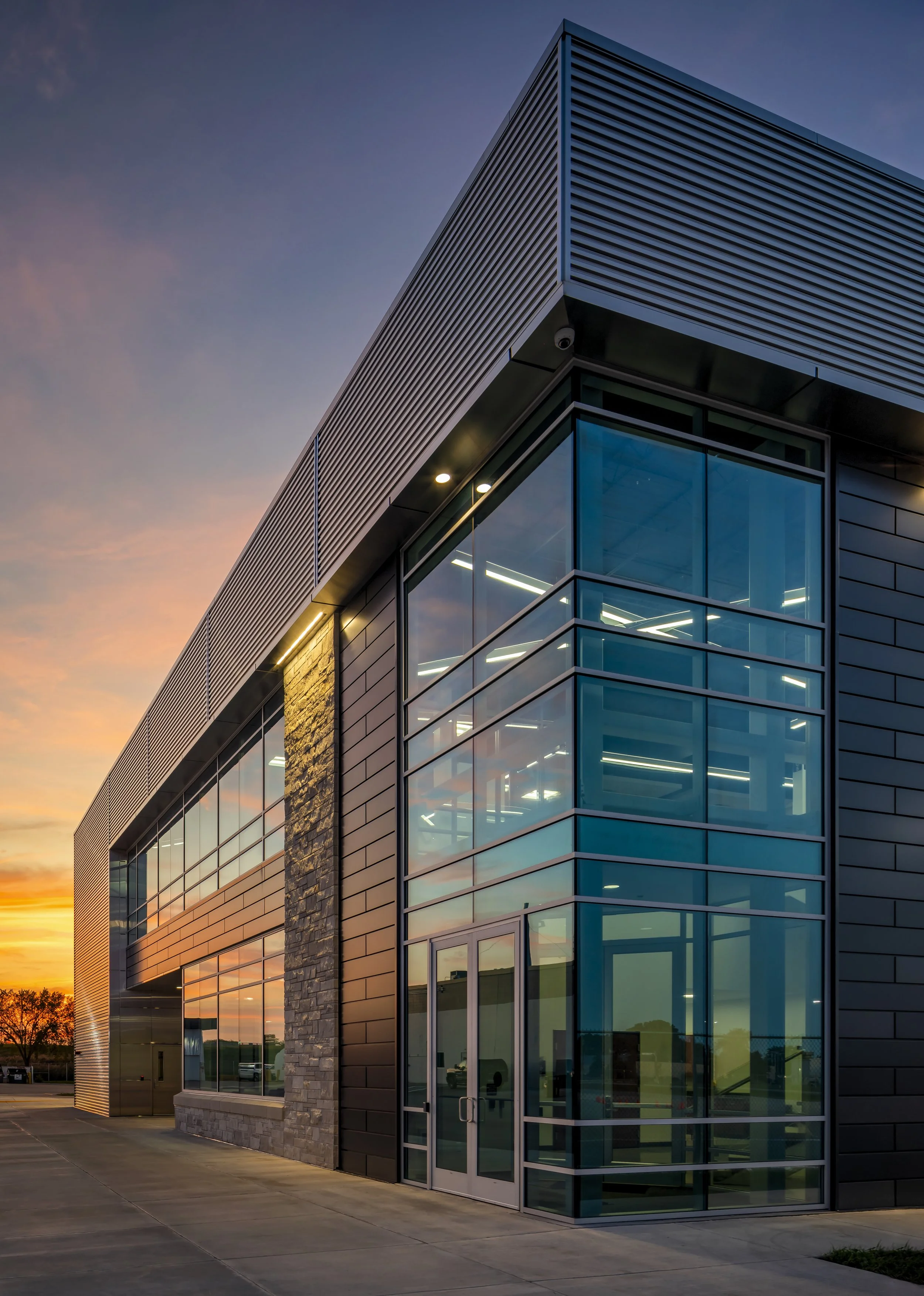
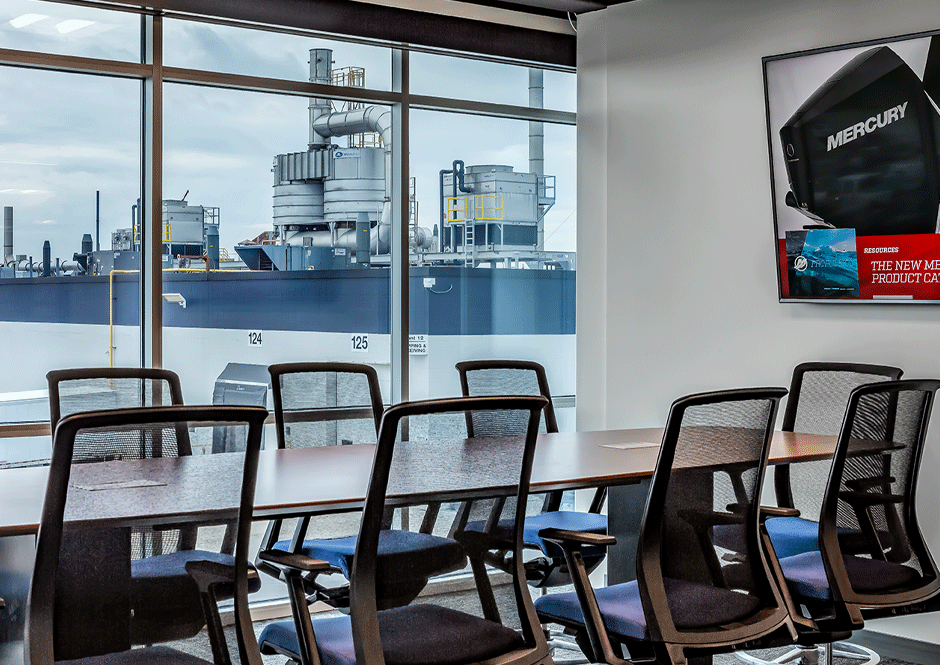
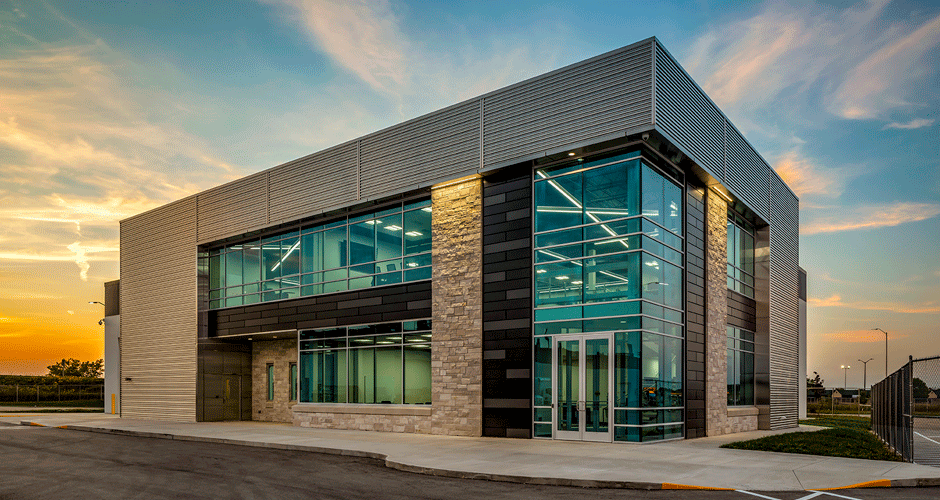
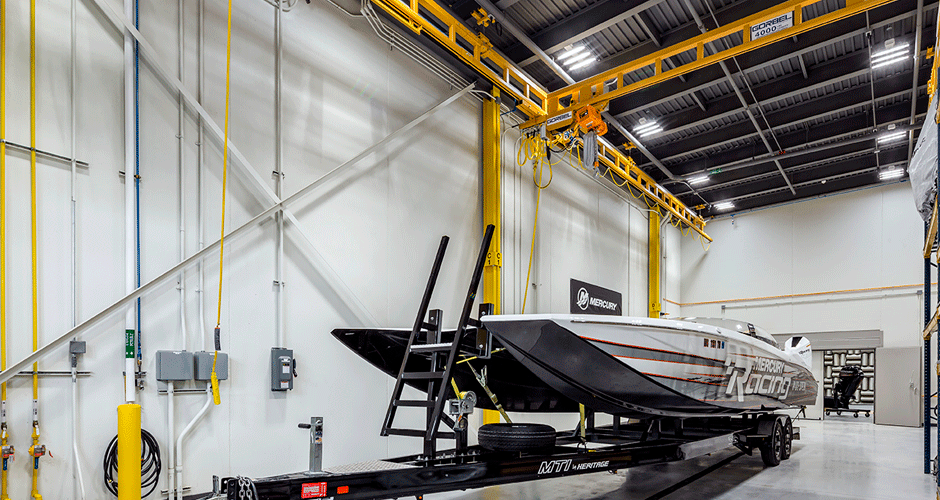
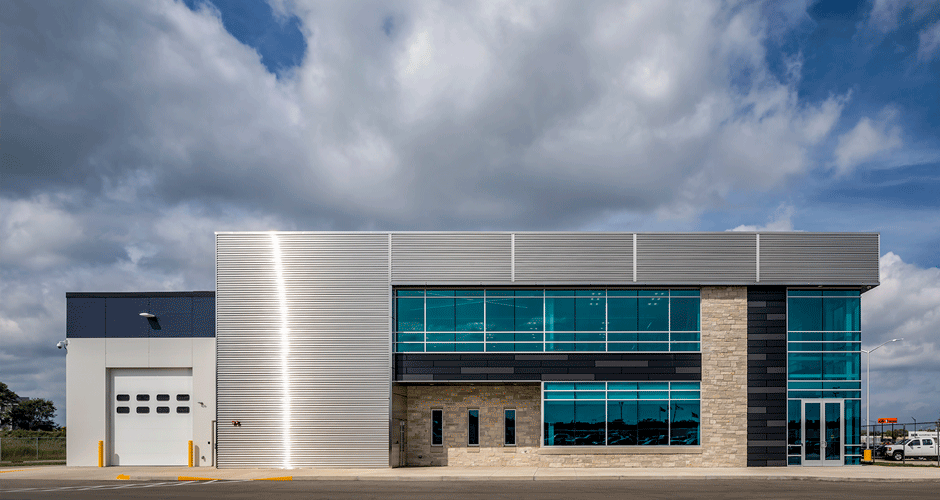
Mercury Marine has been at the forefront of Noise, Vibration, and Harshness (NVH) testing and the development of marine products for decades. The company consistently leads the industry in the production of outboard and sterndrive motors, and additional test capacity allowed Mercury to exceed its product development goals. Opened in December 2018, the two-story, nearly 20,000-square-foot NVH Technical Center represents a $10 million investment at Mercury's Product Development & Engineering Center. Two highly flexible, fully capable test chambers were designed specifically for testing a variety of marine products and higher-horsepower engines.
A One-of-a-Kind Vibration Isolation System
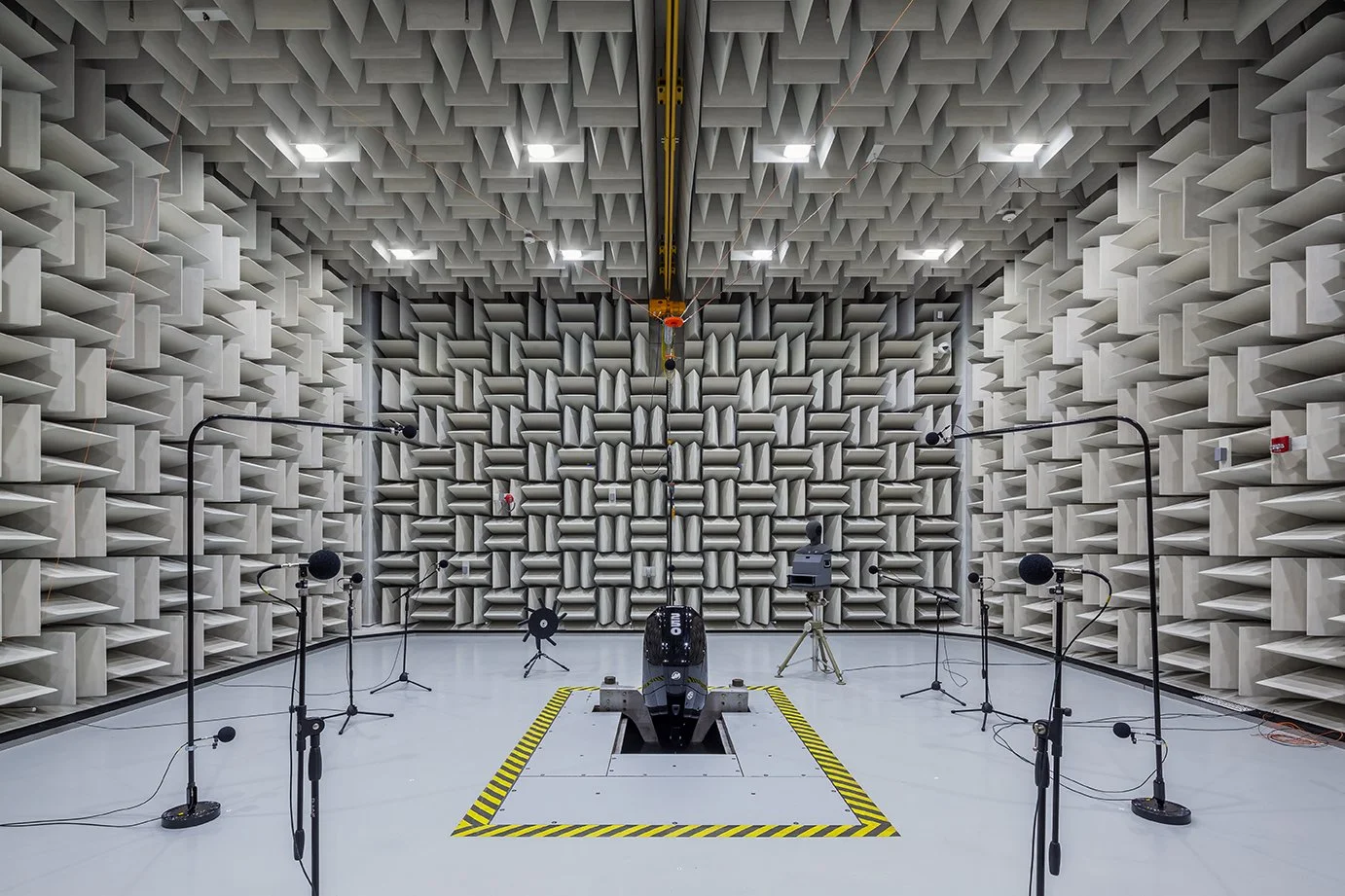
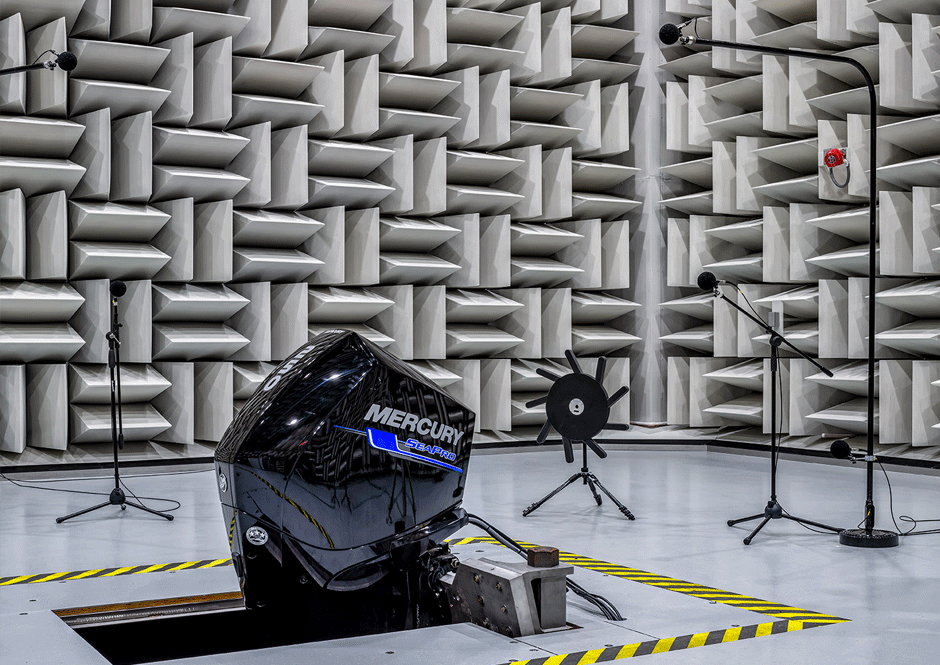
Hemi-anechoic test facilities are nothing new within the NVH testing community. However, supporting test rooms on a steel coil vibration isolation system above a 66,000-gallon water reservoir was a one-of-a-kind installation. The test rooms are rooms within rooms, self-supporting, and in contact only with the spring-isolated floor slab, maintaining the highest degree of vibration isolation possible. Vibration-isolating mounts are placed between the foundation walls and piers and the underside of the test room floor to isolate the test room floor and acoustic room structure from any remaining unwanted ground-borne vibration.
Engineering the Water Reservoir
Marine product testing must replicate the open water environment to accurately simulate real-world NVH characteristics. Each NVH test room sits over a basement water reservoir, but a simple water tank alone isn't enough. Replicating the flow characteristics found in open water conditions was critical to accurately simulating the real-world environment. Mercury engineers used computational fluid dynamics (CFD) analysis to optimize the depth and shape of the reservoir and mitigate unwanted turbulence and wake formation. This analysis also confirmed the placement of floor support piers, the ideal radius of the reservoir's corners, and the configuration of underwater baffle plates.
Foundation and Structure
The mat foundation is 24-inch-thick, steel-reinforced concrete bearing on compacted native soils. It supports poured concrete walls and piers that carry the load of the test room's concrete slab. The perimeter foundation walls average 36 inches thick to resist the lateral forces of water on one side and earth on the other, as well as the unique geometry required by the vibration isolation systems.
Acoustic Room Design
Hemi-anechoic test rooms are generally sized to allow sound pressure level measurements in the free field of the test source. The test source for this facility was established by Mercury to support the majority of testing across the Brunswick family product line, which required an unprecedented level of flexibility in the test room infrastructure to accommodate a wide range of acoustic test sources, in both physical size and sound level signature. Internal room dimensions, measured wedge tip to tip, were optimized to the minimum desired room cutoff frequency of 60 Hz.
The inherent complexity of NVH facilities demands open and frequent communication between the owner, architects, engineers, and contractors. Mercury Marine's NVH Technical Center has established an industry benchmark for excellence, standing as a testament to the high achievement possible through successful collaboration across the entire project team.
Learn more about our work in this market: Industrial and Commercial
Learn more about our services: Architecture, Engineering, and Planning