

Detroit Zoo:
Polk Penguin Conservation Center
2017 Association of Zoos & Aquariums Best Exhibit Award
2017 ESD Outstanding Achievement Award for Design & Construction
2017 ENR Pyramid Best Project Team
2017 ENR Best of the Best Overall US
2016 ENR Best of the Best, Sports/ Entertainment
2016 ENR Midwest Best of the Best, Sports/Entertainment
2017 Washtenaw Contractors Association Pyramid Award for Best Project Team
2016 CAM Construction Association of Michigan Crystal, Best Project of the Year
2016 AGC Build Michigan
| Client | Detroit Zoological Society |
| Location | Royal Oak, Michigan |
| Size | 28,000 sf |
| Sector | Education, Community |
| Services | Architecture, Engineering |
| Completion | 2016 |
Architecture has long been inspired by the natural world, and with the evolution of manufacturing and building technologies, it can now replicate the natural world. The Polk Penguin Conservation Center at the Detroit Zoo, a 33,000-square-foot facility that opened in April 2016, is the largest penguin conservation center in the world. After teams from the Detroit Zoo traveled to Antarctica to study the species that would live in the new center, they supplied photographs and data to Kahn to design a home fit for these incredible creatures.
Exterior Design
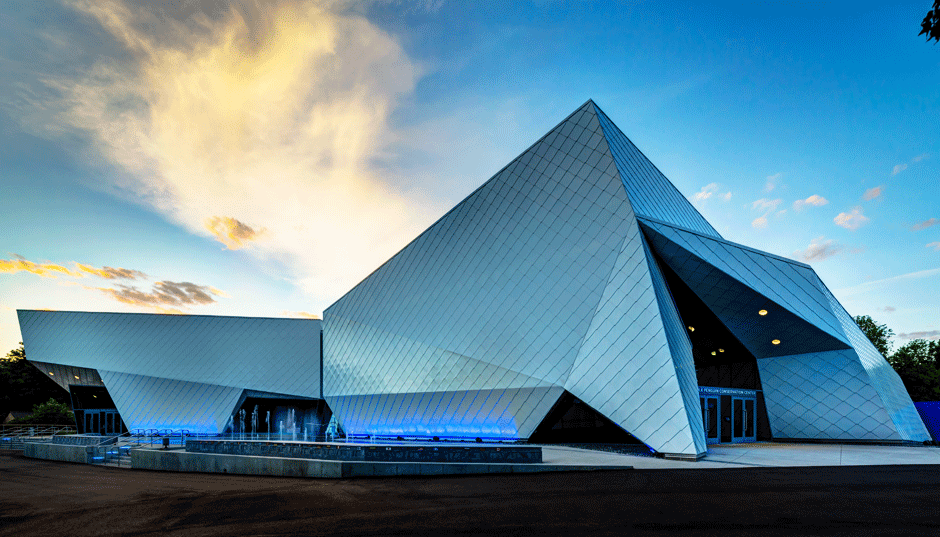
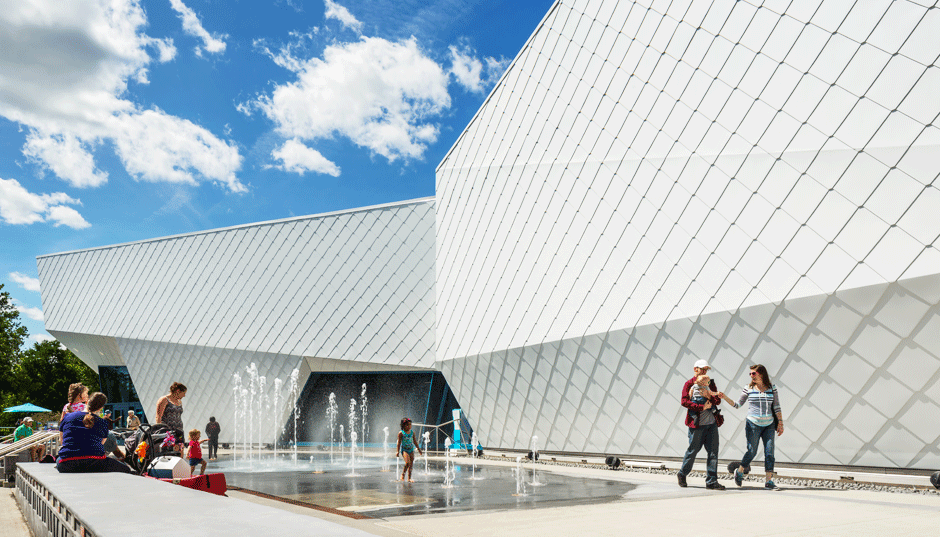
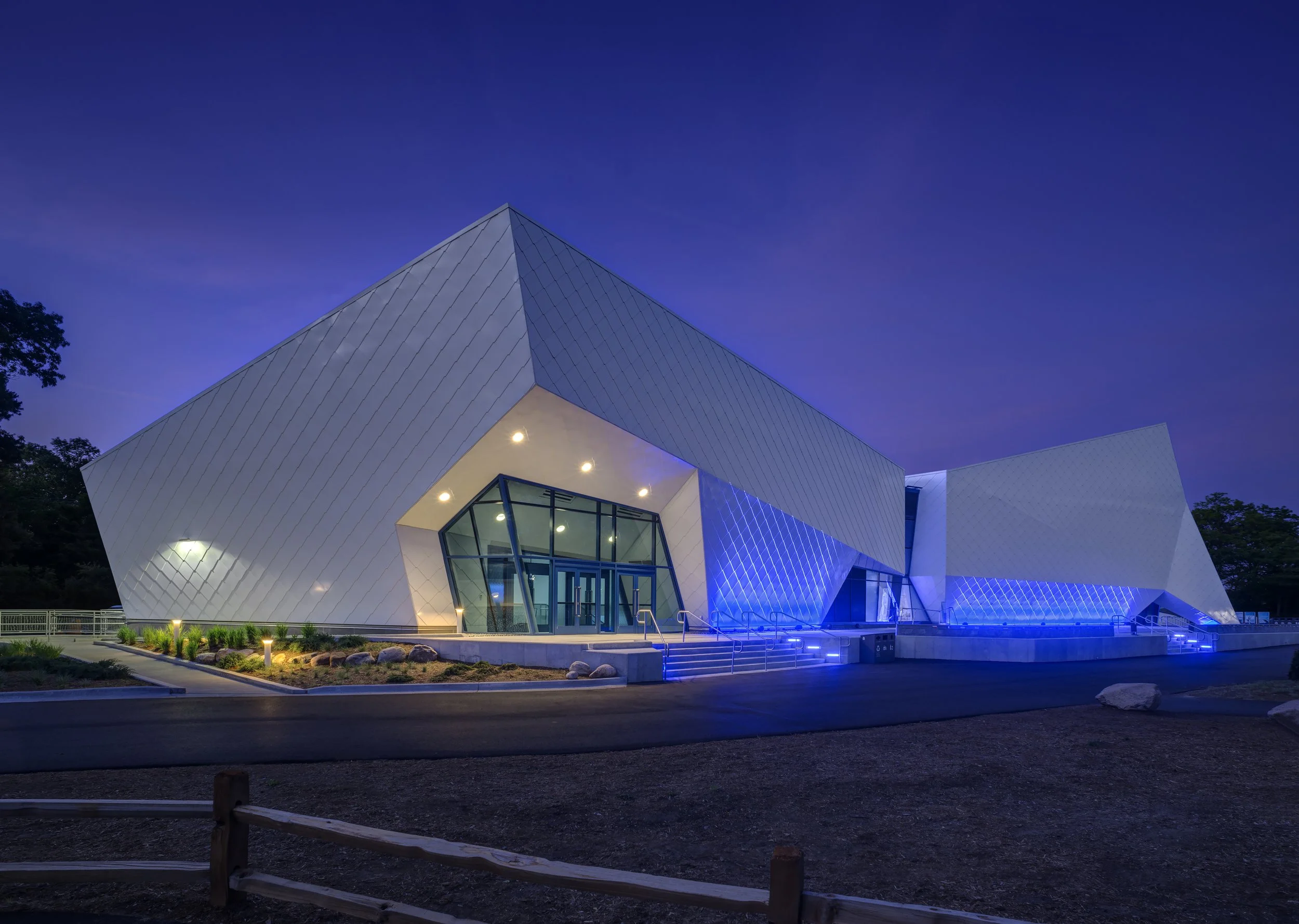
As visitors approach the building, they are immediately transported to the heart of Antarctica. The irregular shape of the building represents tabular, or block-like, icebergs near the South Pole. Sections of blue glass are recessed into the structure to suggest natural ice caves and ice calving, the process of ice breaking apart from a glacier. The entryway passes through a representation of a 25-foot-tall waterfall in a narrow crevasse made of blue glass.
Through biomimicry, or design modeled on nature and natural systems, the exterior is clad in over 6,000 white metallic shingles that insulate the building while repelling heat, a system inspired by penguin feathers.
Interior Habitat
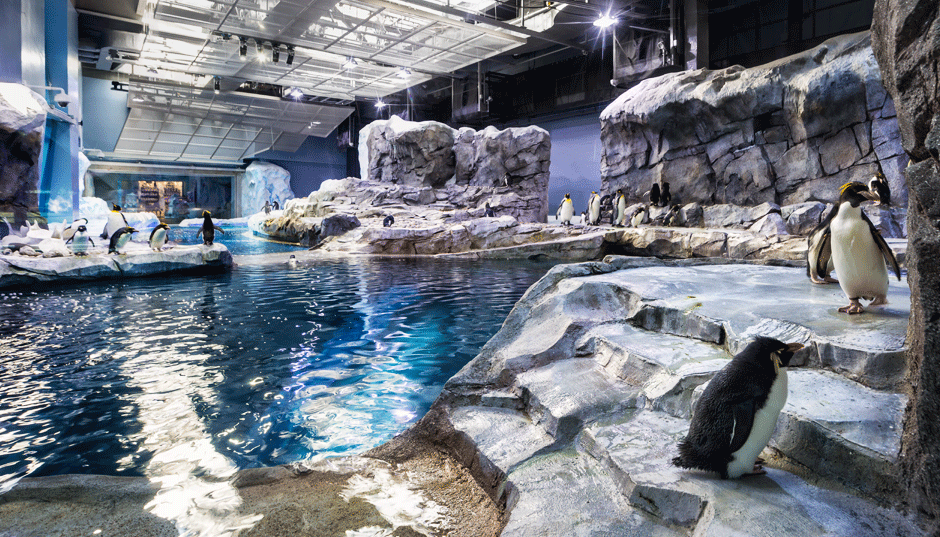
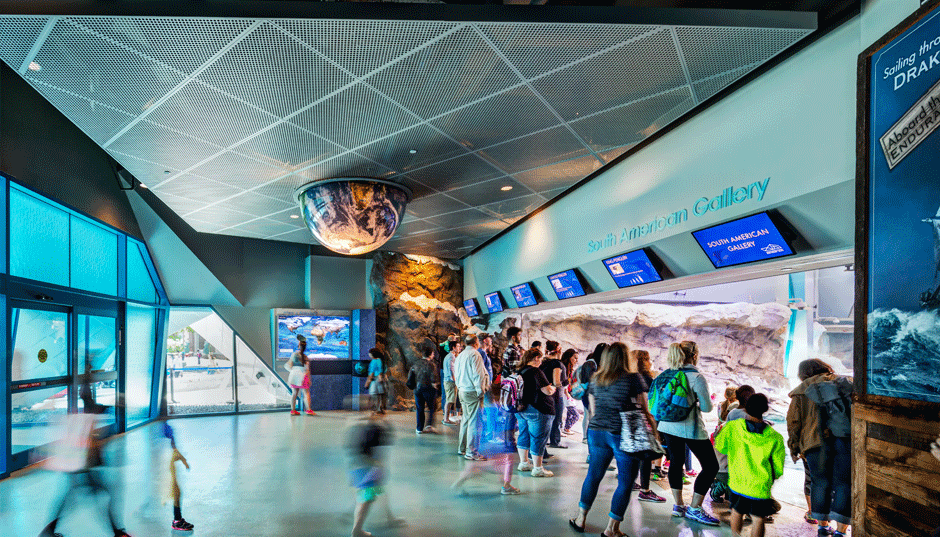
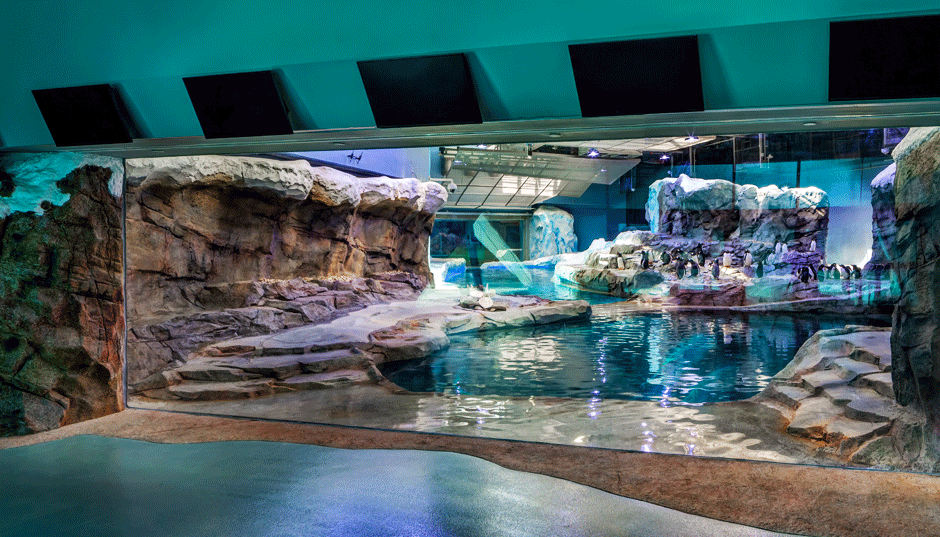
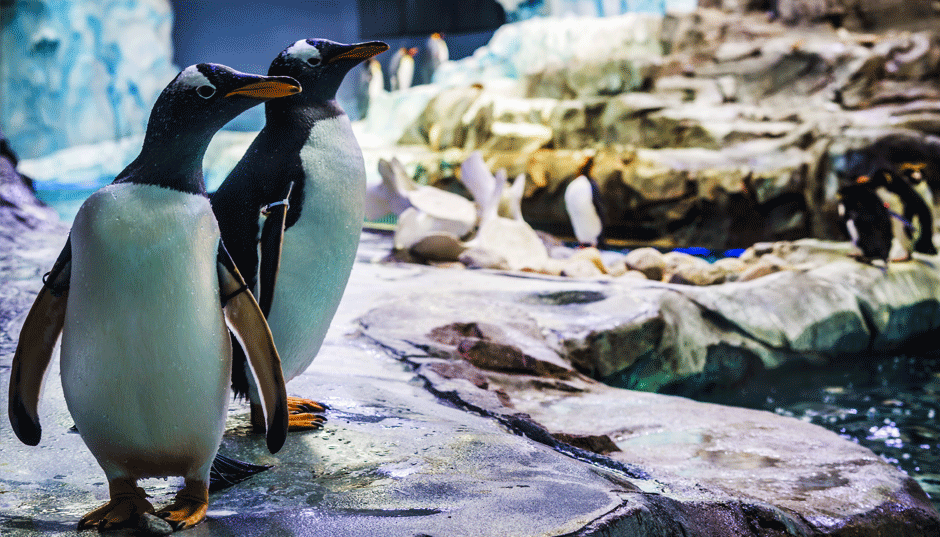
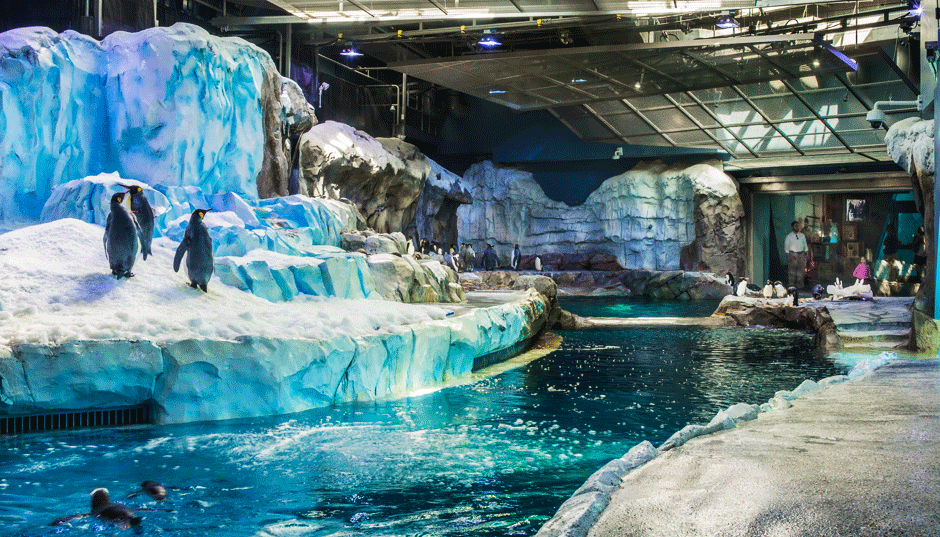
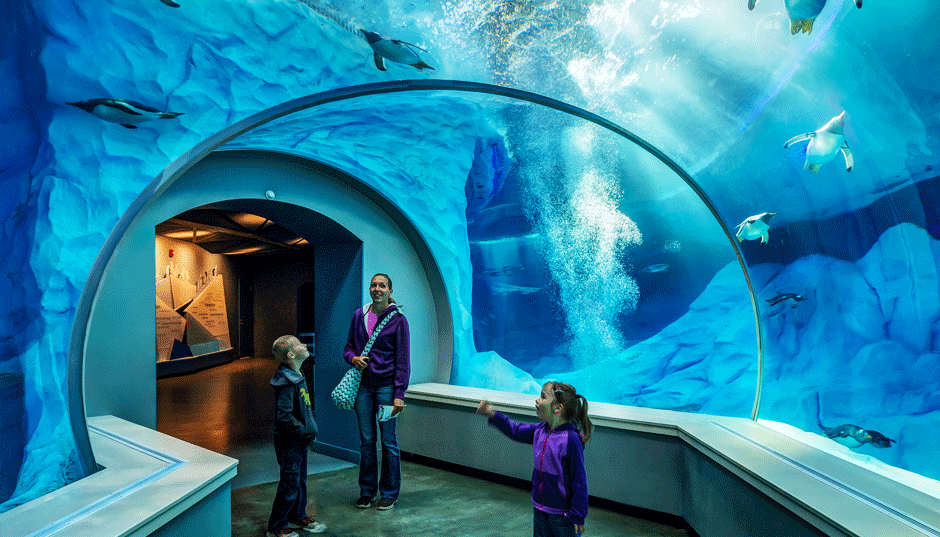
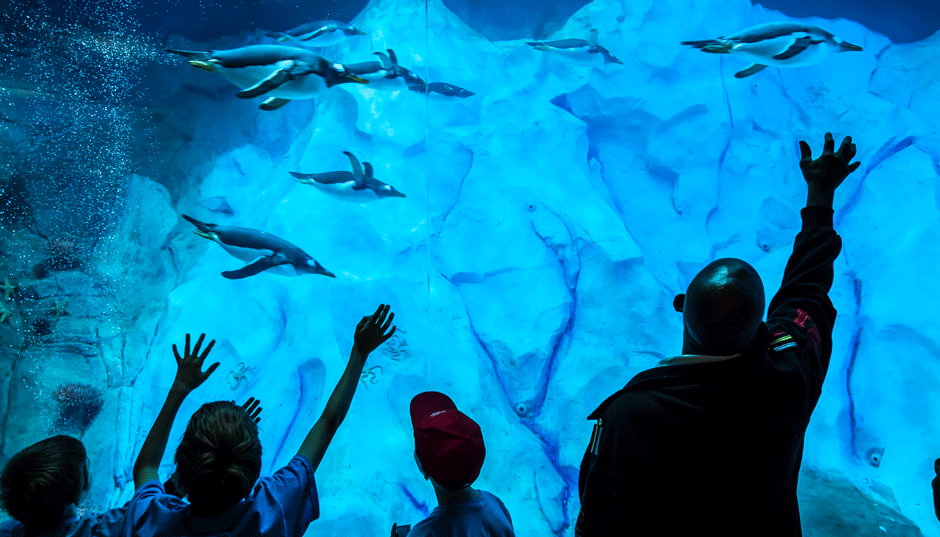
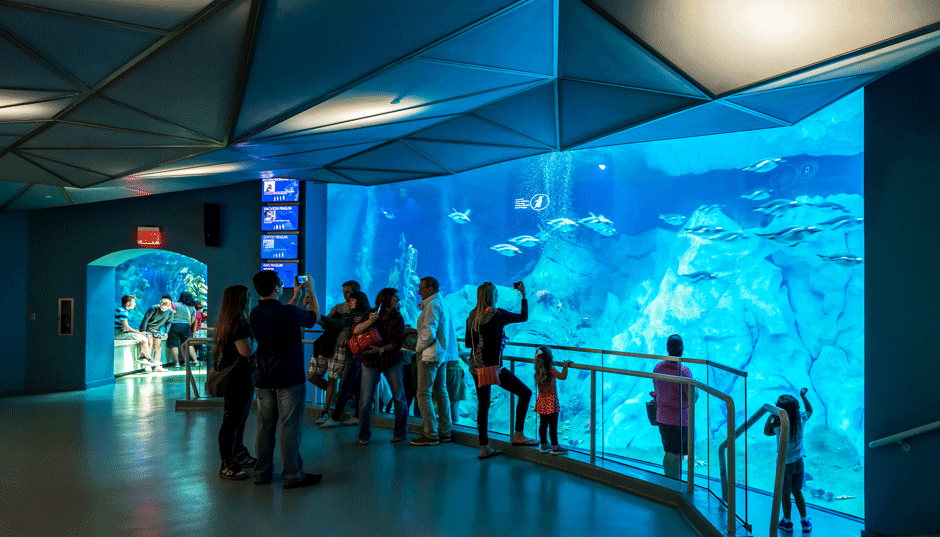
Inside, king, rockhopper, macaroni, gentoo, and chinstrap penguins dive and swim through a 25-foot-deep, 326,000-gallon aquatic area. Visitors can walk through two underwater tunnels as the penguins move around them. Above the waterline, penguins have an Antarctic-inspired space to nest and raise their young. The interior space was designed in collaboration with Jones & Jones Architects and Landscape Architects, along with a team of museum, interpretive, and aquarium design consultants, to ensure every material selected would support the penguins' health and wellbeing.
Engineering and Systems
Lighting was specially designed to promote the penguins' health, providing a wide spectrum of wavelengths, including ultraviolet light and nighttime lighting that can be adjusted to reflect seasonal changes. Advanced engineering systems conserve, filter, and recycle water, maintain clean air, and separate temperatures for public and penguin areas. A custom-designed blow-down system with vacuum air lines, inspired by air systems used in automotive plants, was engineered to clean the habitat.
Mission
The Detroit Zoo is driven to reduce its ecological impact while educating visitors about the effects of climate change. References to the changing environment appear throughout the building's design.

Detroit Zoo Polk Penguin Conservation Center FAQ’s
-
The Polk Penguin Conservation Center is a 33,000-square-foot penguin habitat at the Detroit Zoo in Royal Oak, Michigan, designed by Albert Kahn Associates (Kahn) in collaboration with Jones & Jones Architects and Landscape Architects.
-
The center opened on April 18, 2016.
-
Yes. It is widely recognized as the largest penguin conservation center in the world.
-
The aquatic area is 25 feet deep and holds 326,000 gallons of water.
-
The center is home to king, rockhopper, macaroni, gentoo, and chinstrap penguins.
-
The center was designed by Albert Kahn Associates (Kahn) in collaboration with Jones & Jones Architects and Landscape Architects.
-
The building uses biomimicry, exterior shingles inspired by penguin feathers, and a form inspired by Antarctic icebergs and ice caves, to reflect the penguins' natural environment.
One note: I dropped the specific "75" penguin count from the original draft since sources report varying totals (75 to over 80) across different points in time, and adding chinstrap penguins to the list without an updated headcount could make the number read as stale or inaccurate. Worth confirming a current total count with the zoo if you'd like a specific figure included.
Learn more about our work in these markets: Education and Community
Learn more about our services: Architecture and Engineering