

Designing for Life’s Biggest Moments: A Detroit Architecture Firm's Approach to Healthcare Design
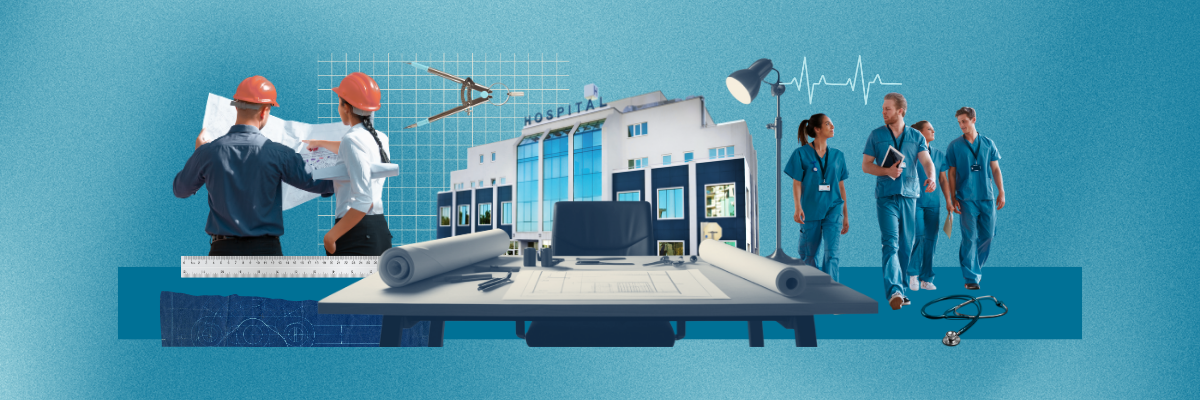
Everyone has a healthcare story. The birth of a child. A hard diagnosis. Even just a routine checkup. Healthcare touches nearly every life, and it tends to show up at the most emotionally charged moments we have. For the healthcare design team at Albert Kahn, a Detroit-based architecture firm with decades of experience in healthcare facility design, that's exactly why this work matters so much.
"Healthcare can be some of the most stressful life experiences, as well as some of the happiest," says Hailey LandisFrame, Healthcare Architect at Kahn, who has spent her career guiding healthcare projects from early concept through construction. "It can be when babies are born, but it can also be when people are sick or scared. In those moments, design can play an outsized role: it can offer comfort, reassurance, and clarity when everything else feels uncertain."
That's the thread running through everything the team does. Healthcare design isn't just about function, it's about meeting people at their most vulnerable and making sure the built environment helps rather than adds to the stress.

Healthcare Design as the Heart of a Community
Angie Botorowicz, Senior Architectural Planner, who came to Albert Kahn from a career at the University of Michigan, sees healthcare's impact as something that radiates outward, from a single building into an entire city.
"Healthcare is really the core of every community," she explains. "Wherever there's a large healthcare facility, especially an inpatient hospital, not just an outpatient clinic, it tends to create an environment that expands everything else around it: people coming into that space, living in that space, building careers around that space." Put simply: a well-designed hospital doesn't just treat patients. It anchors neighborhoods, drives local economies, and shapes how a city grows.
And the effect compounds. As Angie puts it, when people are surrounded by healthcare, and by others prioritizing their well-being, they start prioritizing their own health too. One building sparks a ripple that spreads through an entire community.
Designing for Dignity, Not Demographics
One theme stood out above the rest: healthcare might be the one building type that truly serves everyone, no matter their income, background, or circumstance.
"It's not like a rich person's home, and it's not something only a small group of people can access," Hailey says. "It's for the broader population, so it can give back to everyone." Angie agrees. From the moment a baby is born to the end of a person's life, everyone needs healthcare. Nobody is exempt.
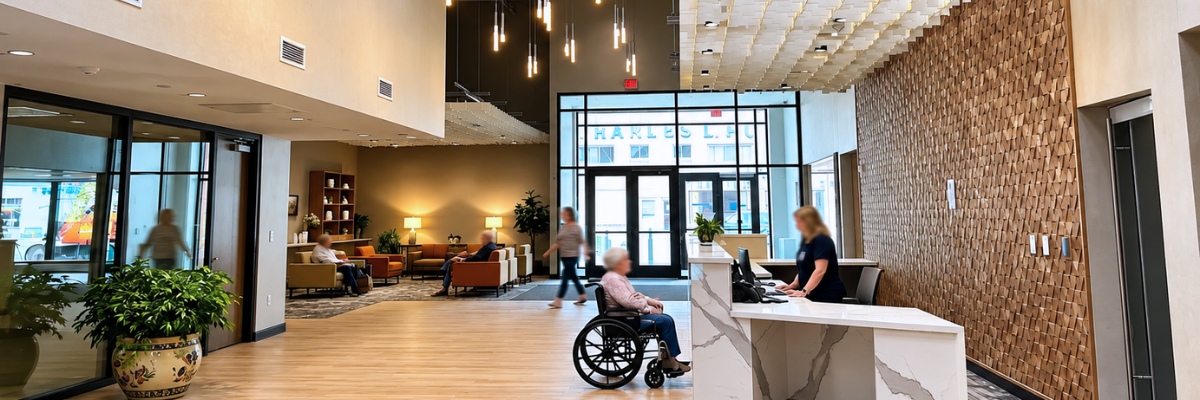
Our Corktown Health Project embodies this idea. This project is a community health center serving Detroit's LGBTQ+ community alongside the broader neighborhood. Hailey remembers a story the project leader shared with her: a patient walked into the finished lobby and asked, “Why does this look so nice? We're not fancy people.”
The answer was simple. Every patient, regardless of what they could pay, deserved an elevated, dignified experience, both in the care they'd receive and in the space that surrounded them.
Brooke Longcore, Senior Architect at Kahn, had her own experiences with healthcare accessibility. She grew up in a small town in West Michigan, where getting to a doctor was its own obstacle. "Having access to healthcare, even as a teenager was really difficult, because we would have to drive more than 20 minutes," she says, "if you broke your leg or broke a bone, those 20+ minutes feel a lot longer." That early experience shaped how she thinks about design today. "I think that's really what inspires me: just that feeling that everybody does matter, no matter what your economic background or your location is. You should still have access to healthcare and a good quality of life."
Brooke also points to a quieter measure of success: design that people don't even notice. "One of our goals is to not stand out," she explains. "If somebody is experiencing a good environment, they're perhaps not going to notice it." She compares it to universal design details like curb cuts: when they're done right, they're invisible, but when they're missing, the experience changes completely for the person who needs them.
Bringing Comfort Home: Henry Ford Health West Bloomfield
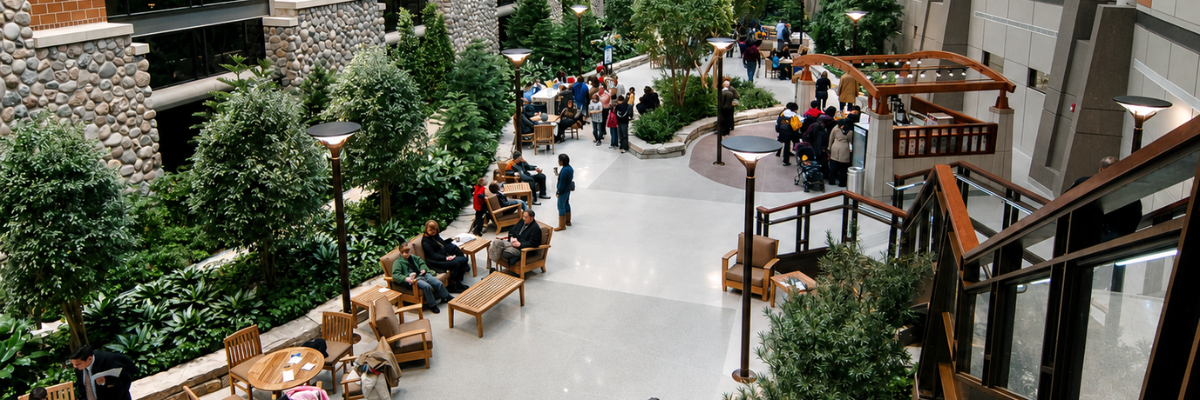
That instinct toward comfort shows up clearly in one of Albert Kahn's healthcare projects: Henry Ford Health West Bloomfield. Rather than the stereotypical clinical look, the team leaned into the feel of a small Michigan town: warm materials, natural light, gardens, courtyards, a pond. Walking up, it feels more like arriving at a Michigan lodge resort than a hospital.
Step inside and you're at a crossroads of streetscapes patterned after a small-town Main Street, complete with shops and restaurants built around nutrition, healthy cooking, and other everyday paths to wellness. Natural stone floors and glacier-inspired ceiling lighting nod to Michigan's own landscape, while curved walls, soft colors, and quieter, glare-free spaces keep things calm throughout the inpatient areas. Two sunlit atriums, full of plants and anchored by a dramatic timber-inspired staircase, tie it all together. The result feels less like an institution and more like a wellness destination, built around the whole person.
It's a good example of how Albert Kahn's healthcare architects think beyond square footage and code compliance. Every material choice and sightline is a chance to make a hospital feel a little less like a hospital.
The People Behind the Design
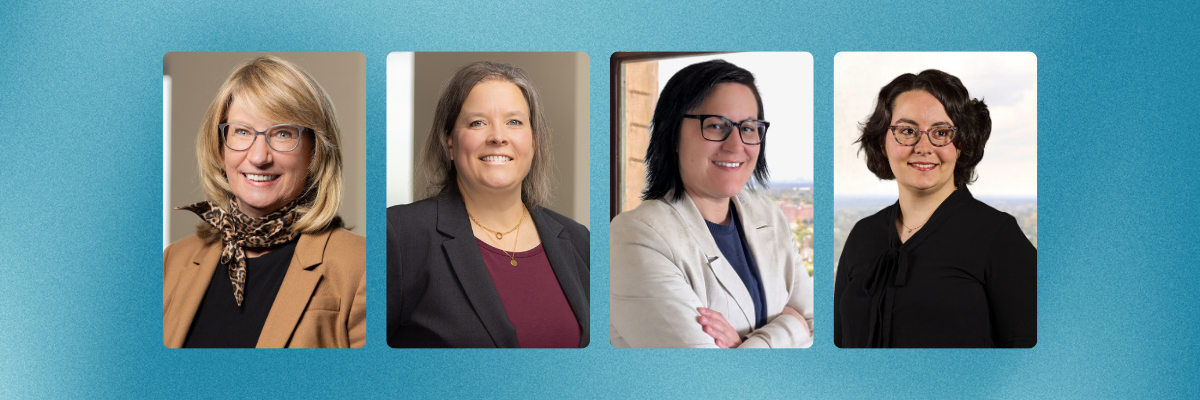
For the Albert Kahn healthcare team, it all comes down to something deeply human: empathy. None of them set out to work in healthcare specifically. Each one describes an almost accidental pull toward the field, and once there, a decision to stay.
"Early in my career, I never thought I would be involved in healthcare," Angie admits. "But once I started to see how I was making a change, how people listened to my voice, and how I was making an impact on how things were going to be better, I just couldn't turn away from it."
That commitment doesn't stay contained to healthcare projects, either. Brooke has noticed the same empathy-driven thinking spilling into other markets the firm works on. "Just having empathy and designing that way, and constantly talking about it, it rubs off on the other industries," she says, pointing to how healthcare's focus on comfort and calm is starting to shape senior living projects too. "How does it feel like home? How does it make you feel calm?"
And that's really the throughline for the whole team. Healthcare design isn't a checklist of technical requirements to knock out. It's an ongoing commitment to the idea that everybody matters, and that the spaces we build for people's hardest and happiest moments deserve just as much care as the medicine practiced inside them.
Partner With Albert Kahn on Your Next Healthcare Project
Albert Kahn is a Detroit-based architecture firm with deep roots in healthcare design, from community health centers to major hospital campuses across Michigan. We're always glad to take on new work close to home, and we partner with healthcare systems and providers well beyond Detroit, too. Take a look at our healthcare and other work, or get in touch with our team to start the conversation. If this kind of empathy-driven design work speaks to you, we're also always looking for people to join us: check out our current openings.