


University of Michigan - Hill Auditorium
2005 ESD Construction & Design Award
2005 AIA Detroit Honor Award
2005 AIA Michigan Honor Award
2005 AIA National Honor Award
| Client | University of Michigan |
| Location | Ann Arbor, Michigan |
| Size | 230,000 sf |
| Sector | Education |
| Services | Architecture, Engineering, Consulting |
| Completion | 2004 |
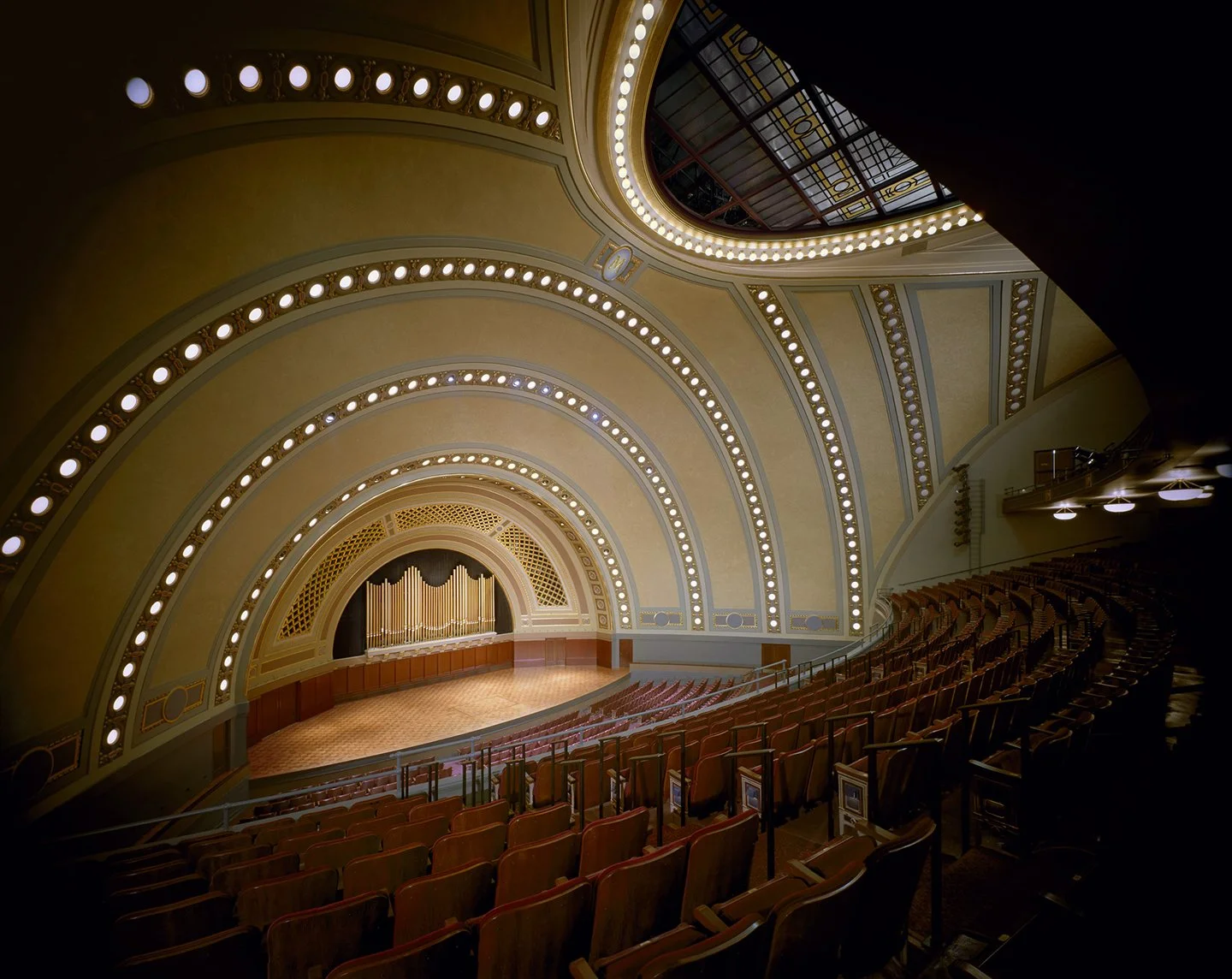
The unique parabolic shape, exceptional acoustics, and large size of Hill Auditorium made it one of the most significant concert halls in America. Designed by Albert Kahn with noted acoustic scientist Hugh Tallant, the auditorium was dedicated on June 25, 1913, and immediately became a centerpiece of the University of Michigan's Ann Arbor campus.
Original Design
The building's design featured decorative terracotta, tapestry brickwork, massive stone masonry, ornamental plaster, and a rich polychromatic decorative finish. The hall originally seated approximately 4,300 people.
Decline and Historic Designation
In the late 1940s, the original seating was replaced, and the original Arts and Crafts interior and rich auditorium lighting were eliminated. Great performances and literary presentations continued even as the hall became technically more outdated with each new decade. Hill Auditorium was added to the National Register of Historic Places on June 15, 1978.
Restoration
After nearly 90 years, a complete renewal of the building's systems and theatrical infrastructure had become imperative. Plans to renew and thoughtfully upgrade the auditorium into a state-of-the-art performance venue emerged in 1998, and the restoration took place from 2002 to 2004, led by Albert Kahn Associates in partnership with Quinn Evans Architects.
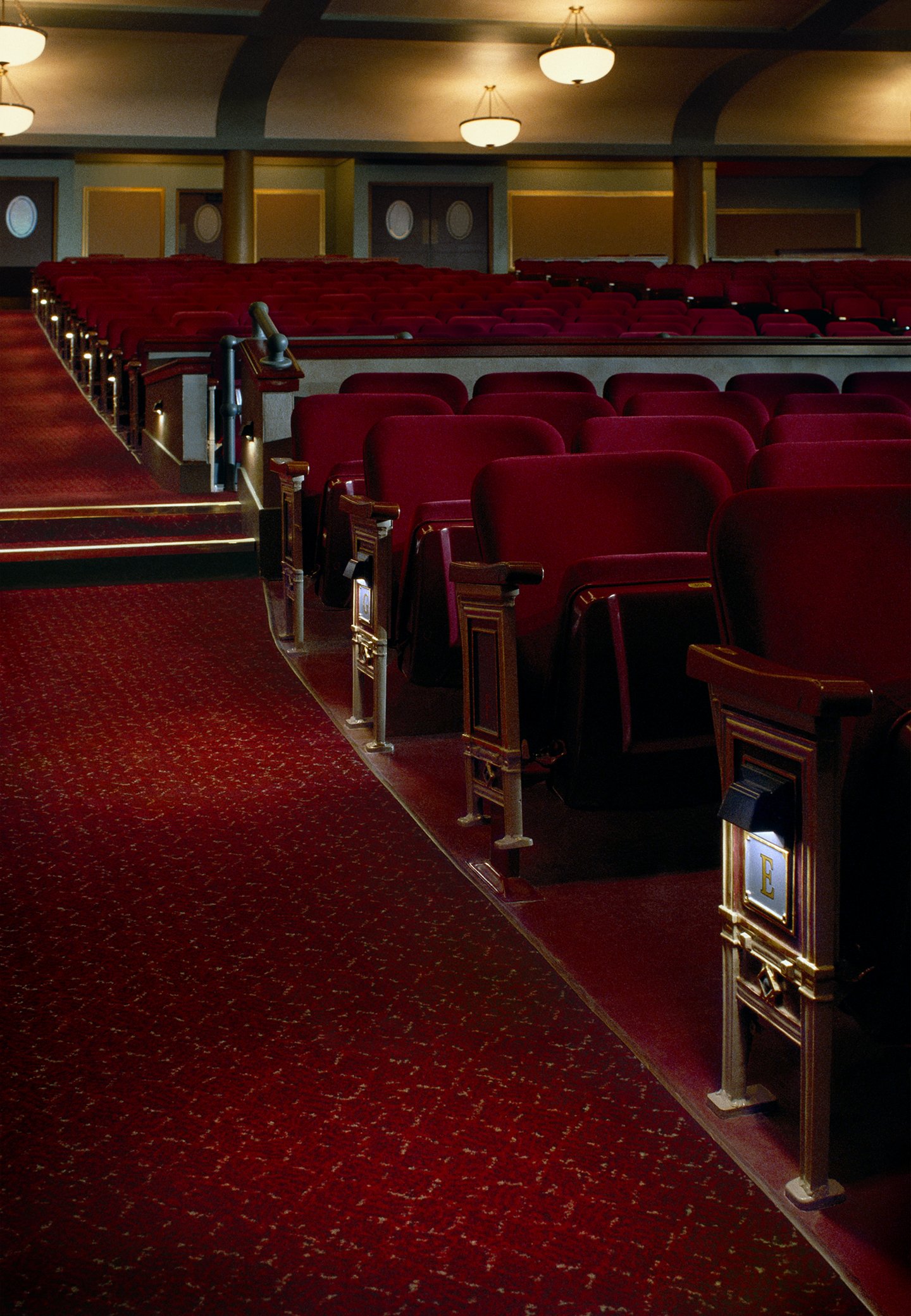
Kahn restored the exterior of the historic structure, including the monumental limestone and tapestry brick façade, and reconstructed the large stone and brick front terrace. Inside, the auditorium was returned to its original Arts and Crafts interior, with its distinctive 2,000-square-foot interior skylight and special bands of ornamental lighting restored to their original character. The acoustic properties of the hall were preserved throughout, and the 1949 seating was replaced with historically appropriate fixed seating, bringing the hall's capacity to approximately 3,500.
Elevators, restrooms, and new lobbies were carefully inserted into the restored building, and a west addition was completed to allow barrier-free access to the stage and orchestra level. A new grand staircase now extends below the historic grand stairs to a new lower lobby and concessions area, which also displays the School of Music's Historic Stearns Collection of Musical Instruments. Behind the walls, a comprehensive building systems upgrade replaced all plumbing, heating, and ventilating systems and introduced air conditioning throughout the building.
With this restoration complete, Hill Auditorium continues to serve the University of Michigan and the greater Michigan public well into the 21st century.




Learn more about our work in this market: Education
Learn more about our services: Architecture, Engineering, and Consulting